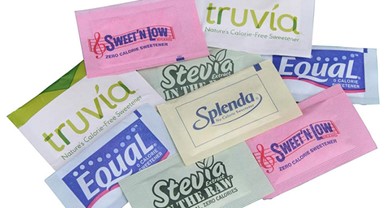
Non-nutritive sweeteners (saccharin, aspartame, acesulfame potassium, sucralose, and neotame) are artificial sweeteners that were actually chemicals that were developed for another purpose until a researcher tasted them and found them to be sweet. They are found in so many products that people can consume them without even knowing it. There is a division in the medical community, those who are for or those who are against their use because the facts about the safety of these artificial sweeteners are still not clear enough. Although for many years there have been studies that say that there are certain risks when consuming artificial sweeteners, it has not yet been proven whether they are big enough to ban their use. For example, it has been proven that there is a possibility that saccharin can cause allergic reactions in people who cannot tolerate sulfa drugs. Reactions may include headaches, difficulty breathing, skin rashes, and diarrhea. Saccharin is also believed to be found in some baby formulas and can cause irritability and muscle dysfunction. For these reasons, many people still believe that the use of saccharin should be limited to infants, children, and pregnant women. Aspartame, one of the most controversial artificial sweeteners, poses a risk to people with the rare genetic disorder phenylketonuria and to people who suffer from depression. It is difficult to determine whether there would be long-term health problems if you consume artificial sweeteners during pregnancy or during childhood. None of the manufacturers are saying you can’t consume them, but none of them have long-term studies that prove it’s safe to do so.
Acceptable Daily Intakes are defined for each non-nutritive sweetener and we cannot ingest unlimited amounts of these additives. If you think you are experiencing a symptom when consuming a nutritional or non-nutritive sweetener, then eliminating it from your diet is the best way to determine if this is the case. Sweeteners are not essential nutrients in our diet and therefore exist to nurture our sweet tooth, not our bodies.
M.Sc Emilia Gjorgieva,
Master of Chemical Sciences